About Napa County HMIS

We believe that ending homelessness starts with seeing the whole picture. 

Napa County HMIS

Napa County offers a variety of services for people who are experiencing homelessness or at risk of becoming homeless. Services are coordinated by Napa County and partnering agencies through the Napa City and County Continuum of Care.

AdobeStock_504064878

Participating Agencies

List Last Revised January 23, 2026
Better Together

A Unified Front for Lasting Solutions

Ending homelessness is a collective effort. Our HMIS participating agencies include a diverse network of service providers, non-profits, and government entities committed to data-driven solutions.

home-acc-2
View Participating Agencies
  • Abode Services
  • Catholic Charities of Napa Valley
  • City of Napa
  • Health and Human Services
    • Self Sufficiency
    • Comprehensive Services for Older Adults
    • Behavioral Health Services
  • Housing Authority, City of Napa
  • Mentis Napa
  • Napa County Housing and Community Services Napa
  • County Office of Education
  • Nation’s Finest
  • NEWS, Domestic
  • North Bay Housing Coalition
  • On the Move
  • Progress Foundation
  • Queen of the Valley Medical Center
  • Satellite Affordable Housing Associates
  • Up Valley Family Centers

What is HMIS?

A Homeless Management Information System (HMIS) is a database required by HUD for organizations providing services to people experiencing or at risk of homelessness. It creates a comprehensive view of homelessness, enabling data-driven decision-making and efficient resource allocation.

We utilize Clarity Human Services in our community. This platform allows local organizations to coordinate care, identify service gaps, and make informed, equity-consistent decisions to end homelessness.

Learn More About HMIS Software
Home-Banner-2025

Clarity Human Services

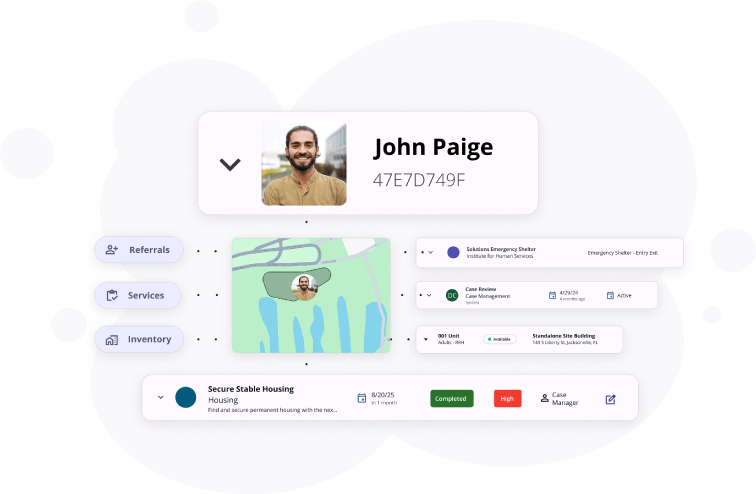
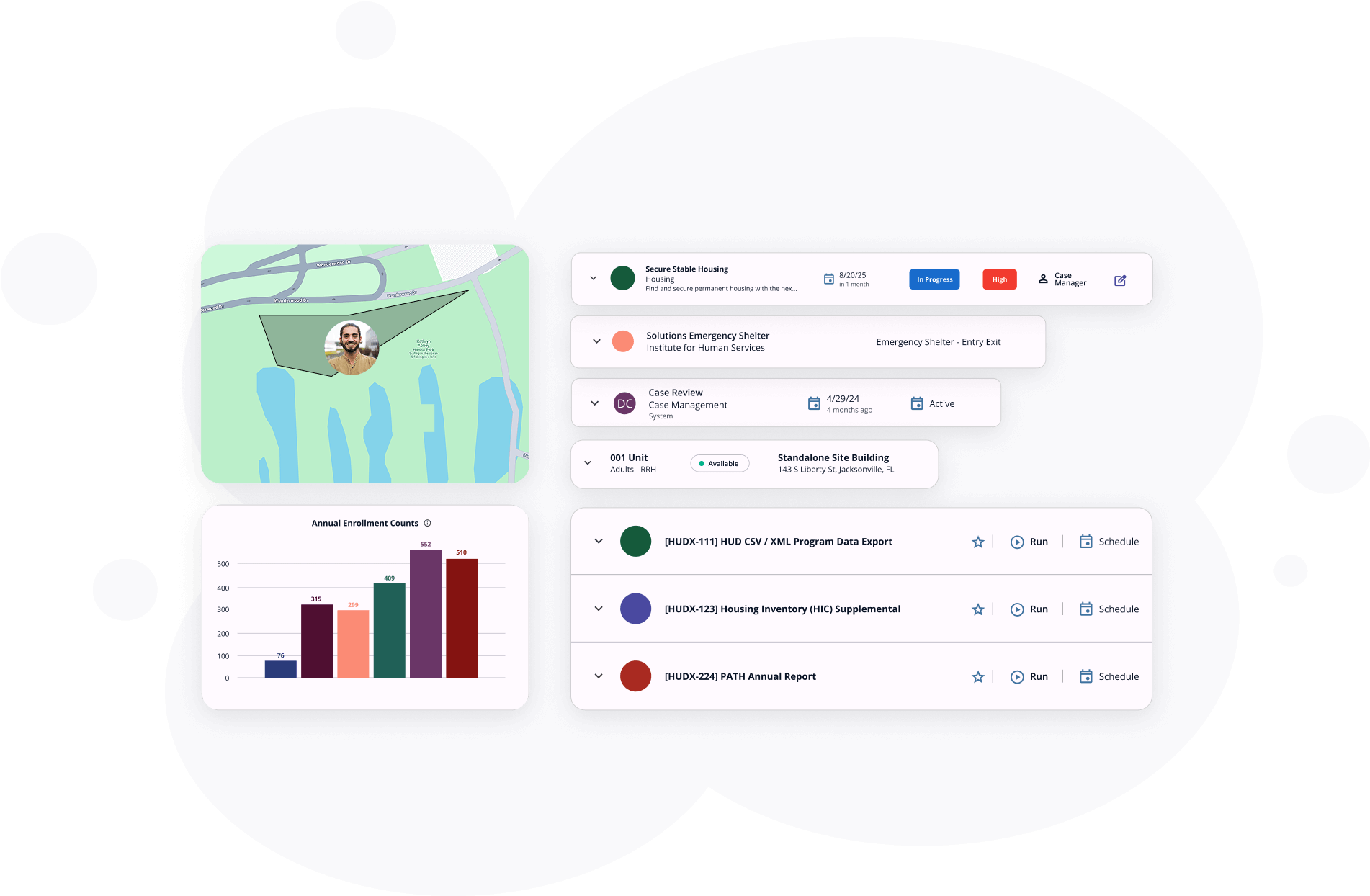
More than just a database, Clarity Human Services is a solution designed for the real world. It is the most advanced HMIS software in the industry, featuring an intuitive interface and real-time processing that keeps your focus on the mission, not the paperwork.

Learn More About Clarity Human Services
product-overview-hero2

Powered by Bitfocus

Bitfocus is a unique blend of technology and public policy professionals. We don't just develop software; we work alongside stakeholders to use data effectively for strategic planning, performance measurement, and coordinated assessment. With over two decades of industry experience, Bitfocus provides the specialized system administration and technical expertise required to sustain a high-performing HMIS environment. Our goal is to help you use technology to turn the tide on homelessness.

Learn More About Bitfocus

About-Block-2

The Heart of Your Homelessness Initiatives

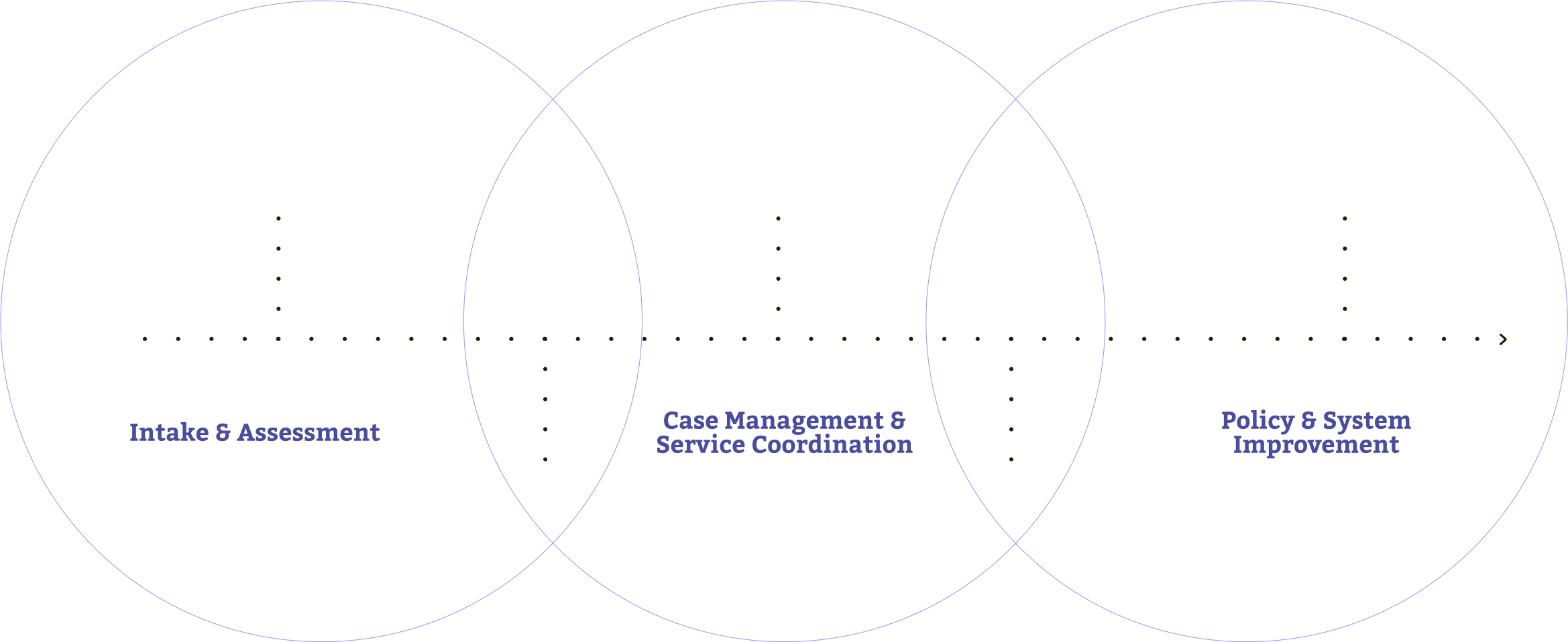
Clarity connects everyone involved in your homelessness response, from intake to reporting, so no one falls through the cracks.


outreach-worker 2
Outreach Workers
Build trust and drive positive interactions.
system-admin 1
System Admins
Maintain A+ data and set systems up for success.
policy-maker-2 1
Policy Makers
Make informed, impactful decisions about your community’s future.
case-manager 2
Case Managers
Facilitate cohesive care at each step — no gaps, no confusion.
Policy-Maker 3
CoC Leaders
Balance the needs of every stakeholder while bringing more folks home.
bg-overview-product

FAQ

The HMIS Standard Intake asks the question of race and ethnicity. What is the difference?

This is an example of how academic terminology does not always line up with how people actually talk or identify. This question can be especially confusing because people of Latin American descent would say their race is “Hispanic,” for example, and would not be referred to in casual conversation or seen in their communities as “White.” Unless the person is from an original people’s group—that is indigenous or American Indian—their ancestors came to South America, Central America, North America, Cuba, or Puerto Rico from another part of the world like Africa or Europe, causing them to be included in one of the racial categories listed.

By the time you get to the Ethnicity question, you’ve likely already asked the client what their race is, and they might have responded with something like “Hispanic,” “Guatemalan,” or “Latino.” To help ascertain the best response for “Race,” you could say, “Great, I will say that you are Hispanic [and use that response for the Ethnicity data element]. Do you know if your ancestors were originally from a country like Spain, somewhere in Africa, or are you part of an indigenous group?”

If the person doesn’t know his or her race or ethnicity or refuses to disclose it, you should use “Client doesn’t know” or “Client refused” rather than making an assumption.

How does HUD define employment income?

For the purpose of defining employment income for reporting in the Homeless Management Information System (HMIS), HUD relies on the Internal Revenue Service’s (IRS) definition of wages, salaries, tips, and business income. The IRS requires people to report all income received from a business, unless it is excluded by law, and any income paid as compensation for employment. The income may come in regular increments (e.g., through a regular paycheck for a full- or part-time job) or be paid in irregular increments (e.g., for day labor or occasional contract work like construction). It is important to note that the employment income is collected as a monthly income amount. Irregular increment payments should only be included in they are received with some frequency. For instance, if a homeless person does regular seasonal work the worker should try to assess what that amount would be per month over the year. Recipients should include income from sources even if it is not reported to the IRS (i.e., under the table work).

In the event that a person is receiving an education or employment stipend to cover the cost of living, the amount of money associated with those living costs should be counted as employment income. This would not include the cost of paying for school related expenses (for an education stipend) or business expenses, like uniforms or tools (for employment stipends). Money received from tax refunds, including the earned income tax credit, should not be counted as employment income.

This definition of employment income is intended to assist persons entering data into HMIS in determining what employment income means. For the purpose of reporting, HUD does not require documentation that verifies employment income, such as tax documentation. This response is not intended to answer every question regarding all possible sources of income. Rather, this response is intended to provide persons entering income data into HMIS with the basic parameters and guidelines whereby they can decide how to characterize various income sources that their clients present with.

Please note that this guidance is limited to HMIS data entry only and does not replace or supersede any income eligibility requirements, including documentation a particular program may require and does not relate to rent calculation income or documentation. For further information about income eligibility requirements, recipients should refer to the regulations and guidance documents for the program funds that they are receiving.

Clients in my program are sometimes unwilling to provide identifying information. Can I just record “client refused” rather than asking?
No, absolutely not. Some clients may decline to provide responses to some questions, but you may not make that decision for them. At a national level, in every project type, a majority of clients are willing to provide identifying information. If your project – or a project in your Continuum of Care (CoC) – is experiencing a high rate of client refusals as compared to similar projects, consider implementing trainings around interviewing or trust-building techniques to support client engagement. A deeper engagement with the client that may lead to more rapid movement off the street and placement in housing is consistent with meeting federal goals to end homelessness and improvement on HUD’s System Performance Measures.
What happens when a household remains working with the same program, but moves from one unit to another without any days of homelessness in between?
It is not necessary to exit and re-enroll them. The move-in date would still accurately reflect the day they entered permanent housing according to that enrollment record.
What happens when a household remains working with the same program, but temporarily experiences homelessness before moving into a new unit?

The purpose of the housing move-in date is to distinguish between housed and homeless status within an enrollment. Therefore, it would be accurate to exit the household from their first enrollment on the date they fell back into homelessness. The correct homeless exit destination ought to be selected.

A new program enrollment with the appropriate homeless prior living situation selected ought to occur the day after they fell back into homelessness. Their new housing move-in date would be captured within their new program enrollment.

What happens when a household remains working with the same program, but temporarily experiences homelessness before moving into a new unit?

The purpose of the housing move-in date is to distinguish between housed and homeless status within an enrollment. Therefore, it would be accurate to exit the household from their first enrollment on the date they fell back into homelessness. The correct homeless exit destination ought to be selected.

A new program enrollment with the appropriate homeless prior living situation selected ought to occur the day after they fell back into homelessness. Their new housing move-in date would be captured within their new program enrollment.

What happens when a household transfers programs, but remains in the same unit?

The enrollment and move-in date of the new program would be the day after the first program ends.

It is not necessary or appropriate to have the original housing move-in date reflected in the new program since the purpose of this data element is to distinguish between housed and homeless status within an enrollment.

Is the move-in date the same as the “lease date"?
HUD defines the move-in date as the date the household is physically sleeping in the unit; sometimes with corresponds with the lease date, but it doesn’t have to.
What happens if there appears to be an overlapping enrollment?
Contact the program to verify/update their data.
What happens if the household never moves into a unit?
Do not enter a move-in date and exit from the program to the accurate destination when appropriate.

Need Help?

Our team is here to help you navigate the system. Reach out for expert support.Adminstrator Sign Offs_Jennifer + Alexis-1